The Giver Problem
Every operation has one, the person who somehow holds it all together. It feels like loyalty. It's actually a single point of failure. Here's the pattern, and the fix that frees her instead of replacing her.
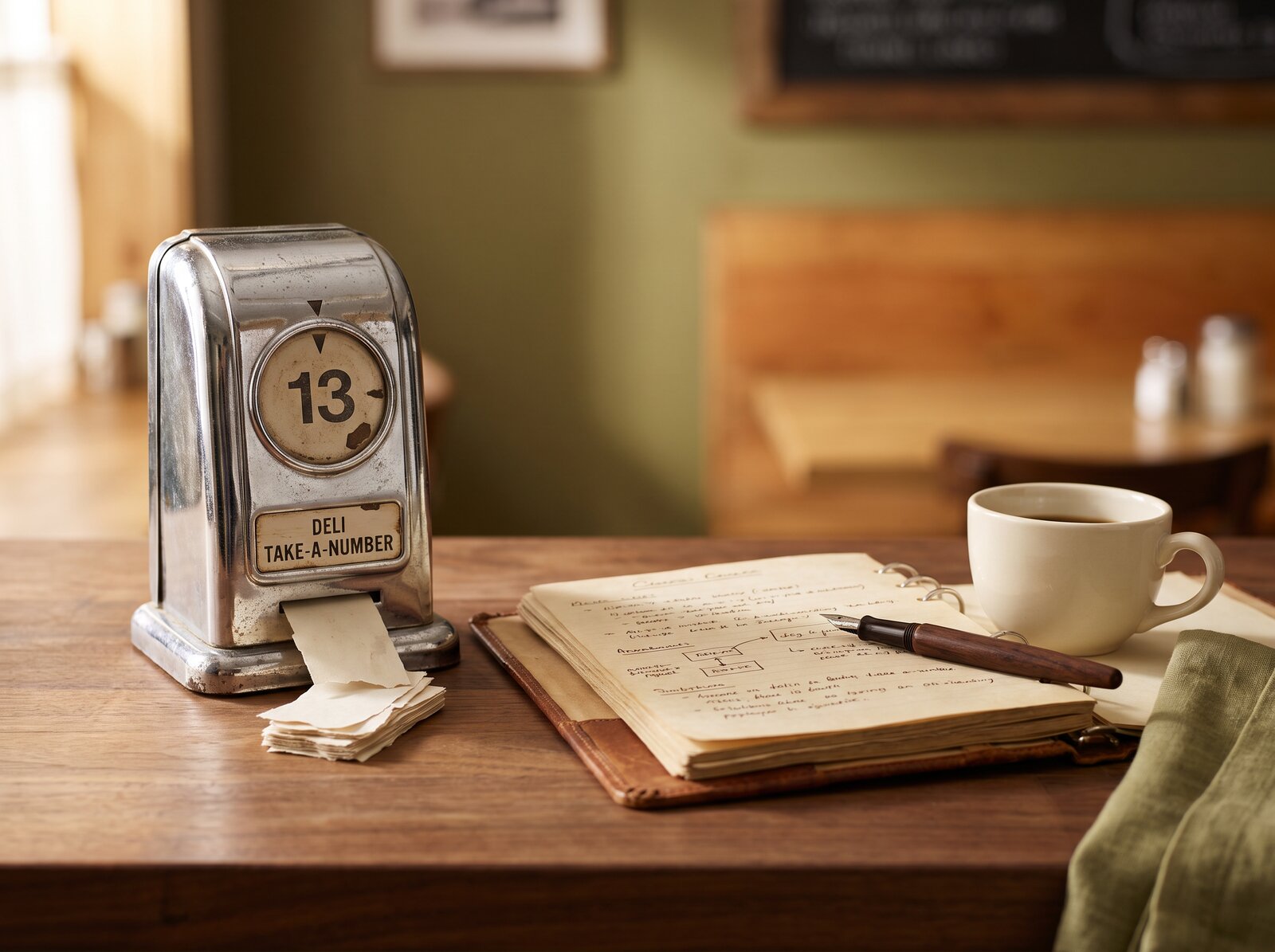
Picture a deli counter on a Saturday. One person behind it, order after order coming in, barely a gap between one ticket and the next.
I've watched this pattern play out at more catering and hospitality operations than I can count. Someone is always standing behind that counter, except the tickets aren't sandwich orders. They're questions, all day, from every direction, all landing on the same person. Which venue has the temperamental freight elevator. Which client always adds a plus-one the week of the event. How the walk-in gets packed for a split-kitchen event so nothing gets left behind. What the old system does if you hit cancel twice. Nobody hired her to be the keeper of all of it. She just became it, one question answered at a time, until the operation was quietly running on her memory.
The bottleneck wearing a title
Watch a Giver's day and the pattern shows up fast. A sales manager pings her about a venue's power capacity. A new hire texts her asking how the walk-in gets packed. A director pulls her into a meeting because she's "the only one who remembers how we handled this last time." None of these people are wrong to ask. She really is the fastest path to the answer. That is exactly the problem. She has become the fastest path to almost every answer, and that makes her a bottleneck wearing a title. It is exhausting to be the answer key for an entire operation, especially when nobody has quite noticed that's the job she's actually doing.
“A bottleneck wearing a title is still a bottleneck. It just has a business card.”
What happens when the door closes
An operation that runs on one person's memory has a ceiling built into it, whether anyone has drawn that line yet or not. Growth means more venues, more new hires, more questions, and all of it still routes through the same door. Add a second location and you haven't doubled your capacity. You've doubled the demand on the one person who can't be in two places.
Then there's the harder version of the same problem. People get promoted. They change careers. They retire, or they simply need a break they've earned ten times over and never taken. When a Giver walks out the door, whatever wasn't written down walks out with her. Not because anyone did anything wrong, but because the knowledge was never anywhere except in her head, and heads don't come with a handoff process.
This isn't about replacing her
It's worth saying plainly: the fix here is not to make the Giver less necessary. It's to make her knowledge less trapped. Those are very different things, and mixing them up is exactly why so many operations never get around to solving this. Nobody wants to sit their best person down and say, in effect, "let's document you out of a job." That conversation goes nowhere, and it shouldn't, because that isn't actually what needs to happen.
What needs to happen is smaller and kinder than that. Take what's in her head and put it somewhere the rest of the team can reach without her. That doesn't shrink her role. It frees her from the part of the job that was never in her job description to begin with, just the accumulated weight of being the only person who remembered.
Turning one person's knowledge into a system anyone can use
Here's what that looks like in practice. Instead of a binder nobody opens or a folder of documents nobody remembers exists, the knowledge gets built into an actual training program. Something a new hire can work through in the first week and come back to in the third month. Something a manager can point to instead of paging the one person who knows the answer. It isn't a static reference that goes stale the day it's finished. It's a living system that gets updated as the operation changes, the same way the Giver's memory always did, except now the whole team can draw from it.
Where this fits into the work I do
Building programs like this, white-labeled to a company's own brand, is part of what a digital systems engagement with Click to Table can include. I work with catering and hospitality teams to get what one person carries in her head into something the whole team can self-serve, whether that ends up being a training program, a documented workflow, or a tool built around how the operation actually runs. It's digital systems implementation, not a training company. The goal isn't a course library. It's getting your best person's knowledge out of the single point of failure it's currently sitting in.
It's the same idea behind pieces of Click to Table itself, like the Event Packet, which keeps an event's details in one shared place instead of one person's head, and the Event Captain Resources, built to turn what an experienced captain knows into training the next captain can use without her in the room. A training program built around your operation does the same thing for everything that lives in your Giver's head.
Free your Giver to do the work only she can do
She didn't sign up to be the answer key. She signed up because she's good at this, because she cares about it, because somewhere along the way she became the person the whole operation leaned on. That's worth protecting. The way to protect it isn't to keep asking more of her memory. It's to build the system that takes over standing behind the counter, so the questions stop landing on her by default and she's finally free to do the work only she can do.
Building better systems for your catering operation?
Click to Table helps hospitality teams turn manual processes into practical digital workflows and tools.
Explore Consulting →Keep going, related on Click to Table