Why Every Caterer Should Mock Up Their Buffet Before Event Day
Thirty minutes in the warehouse can save hours on event day. How a simple buffet mockup reduces surprises, speeds up setup, catches missing equipment, and builds a visual library your whole team can use.
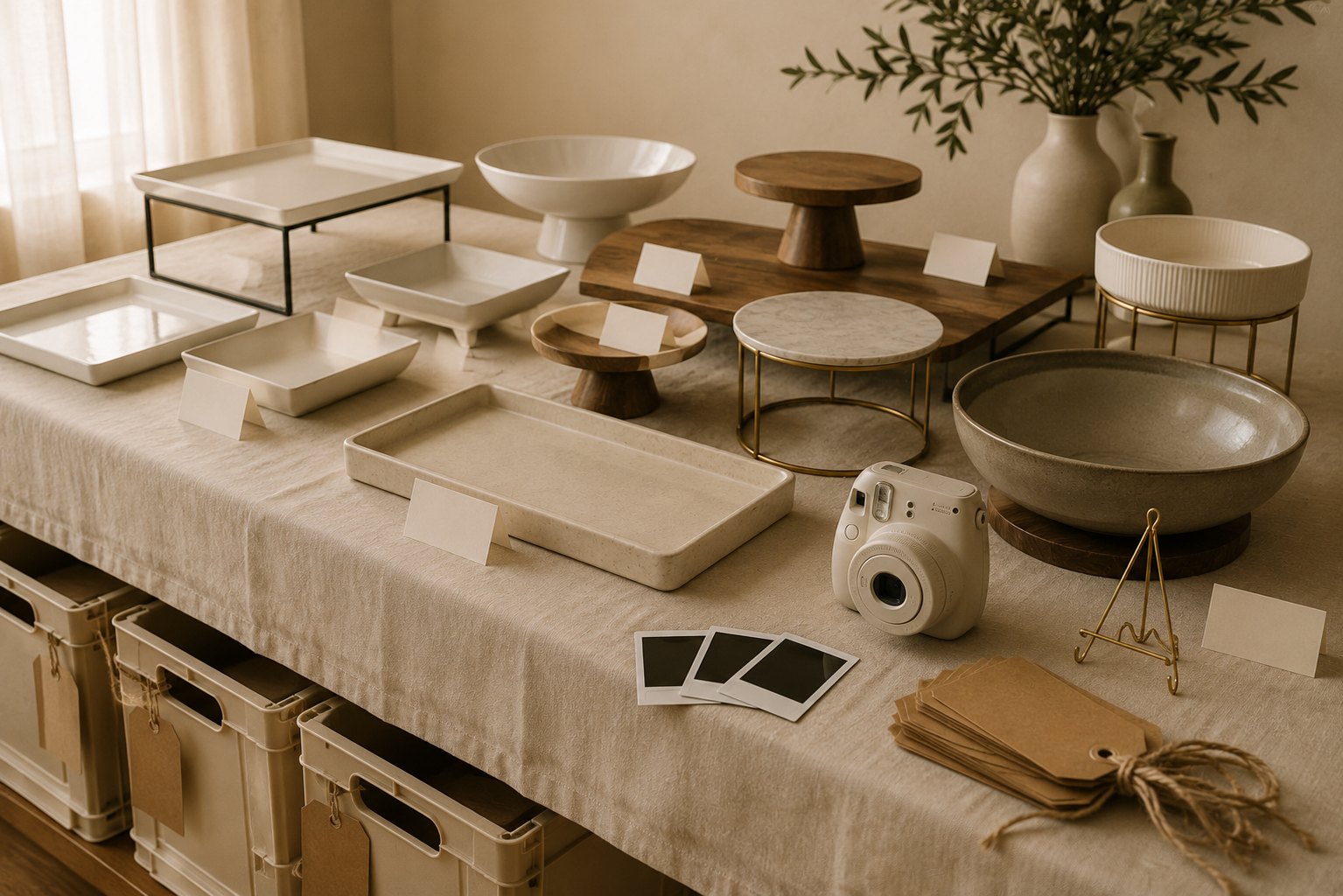
There's a familiar feeling every caterer has experienced. You're halfway through setting a buffet at the venue when someone asks, "Where are the serving tongs?"
Or the risers don't fit the table. The salad bowl is too large. The décor leaves no room for plates. Someone left the menu signs behind. Someone packed three serving spoons but forgot the ladle.
These problems rarely happen because teams don't care. They happen because the buffet gets assembled for the very first time in front of the client. A simple buffet mockup before event day changes everything.
It's more than a pretty setup
A buffet mockup isn't about making something Instagram-worthy. It's about reducing surprises. Building the buffet in your warehouse means you solve problems when there's time, space, and access to every piece of equipment you own. Instead of reacting under pressure, you're making decisions with confidence.
Confirm everything fits
Every venue provides different table sizes and layouts. By mocking up your buffet ahead of time, you'll quickly answer questions like:
- Does everything actually fit on the table?
- Is there enough room for décor?
- Where should guest plates go?
- Is there space for menu cards?
- Does anything feel crowded?
- For a station, is there room behind it for the equipment guests won't see, warmers, ice wells, backup product?
Swapping a serving bowl in your warehouse takes seconds. Swapping it in a ballroom while guests are arriving is another story.
Improve guest flow
Walk the buffet exactly like a guest would, and think about the experience from beginning to end.
- Where do guests pick up plates?
- Does the entrée create a bottleneck?
- Are sauces and condiments easy to reach?
- Is dessert positioned naturally?
- Will guests cross paths?
- Does a station create its own line or bottleneck the main buffet doesn't have?
Sometimes the smallest adjustments make the biggest difference. If your team hesitates while walking through the buffet, your guests probably will too.
Design with intention
The warehouse is the perfect place to experiment. Try different riser heights, linen placement, greenery, signage, candles, and serving vessels. Move things around. Take a step back. Photograph what works. You're not just preparing for one event, you're building inspiration for future ones.
Catch missing equipment before it's a problem
One of the biggest benefits of a mockup is discovering what's missing. Maybe it's serving tongs, soup ladles, garnish bowls, label holders, extra votives, or backup serving utensils. Finding missing equipment while standing in your warehouse is easy. Finding it thirty minutes before doors open usually isn't.
Pack directly from the mockup
This is where the real magic happens. Once your buffet looks exactly the way you want it, don't put everything back on the shelf.
Check off your packing list as you pack
Every item that goes into the tote gets checked off. No guessing, no assuming, no hoping someone remembered. Typical checklist items include serving bowls, platters, risers, serving utensils, heat lamps, label holders, décor, candles, and backup utensils. The packing list becomes verification instead of documentation.
Build a visual library
Take photos before you pack: a wide shot, the guest perspective, an overhead layout, close-ups of décor, and serving utensil placement. Over time you'll build a library of buffet inspiration for weddings, corporate lunches, brunches, carving stations, taco bars, dessert displays, and holiday buffets. Future event teams won't have to guess. They'll simply recreate what already works.
Small investment, huge return
A buffet mockup isn't extra work. It's one of the simplest ways to improve consistency, reduce forgotten equipment, speed up setup, train new team members, and make the presentation better. The best buffets aren't created for the first time at the venue. They're rehearsed in the warehouse. And when the truck pulls away, everyone knows exactly what's on board. Give your stations the same rehearsal, and the same is true for them.
“Great events aren't improvised. They're rehearsed. Every buffet mockup is one less surprise waiting at the venue.”
Rehearse it, then plan the rest
A mockup answers what goes on the table. The Buffet Flow Planner answers how many lines and how much table you need for your guest count, and the Event Packing Checklist gives your team the printed list to check off as each tote is packed. Together they turn a good-looking buffet into a repeatable system.
Finish the job
Buffet Flow Planner
Design a buffet layout that clears the room without backing up.
Building better systems for your catering operation?
Click to Table helps hospitality teams turn manual processes into practical digital workflows and tools.
Explore Consulting →Keep going, related on Click to Table