Designing a Buffet That Doesn't Back Up
A slow buffet line isn't a food problem, it's a layout problem. Here's how to design one that clears the room and keeps guests happy.
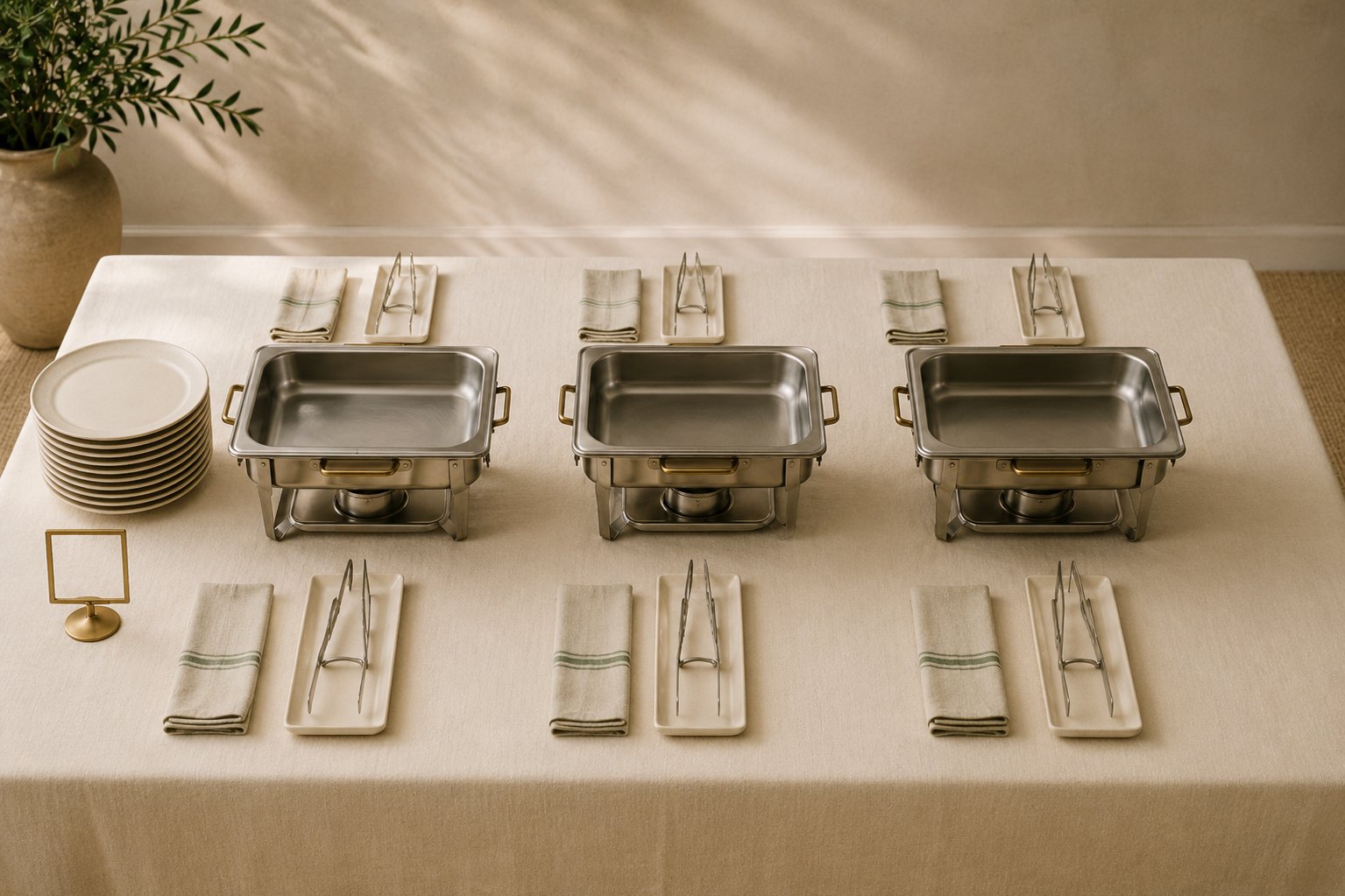
When a buffet backs up, guests notice before the kitchen does. The food may be perfect, but a single slow line turns a celebration into a queue. The good news: throughput is a design decision you make before the doors open, not a scramble you manage once they do.
How to set up a buffet serving line
- Plates at the very start of the line, so guests pick one up before they reach any food.
- Then proteins, then sides, then condiments, in that order.
- Flatware and napkins on the guest tables, not on the buffet, so no one juggles at the line.
- Dessert and coffee pulled to their own separate station, off the main line.
- Four to six feet of clearance so guests pass and staff refill from behind.
- Every dish labeled, allergens called out, so guests decide before they arrive at it.
Throughput is just sides × speed
Every serving side moves a predictable number of guests per minute: roughly three to four for a simple self-service line, fewer when the menu is long or a server plates each item. A single-sided line has one serving side. A double-sided line has two on the same table, so it moves about twice the guests in the same footprint. Stations spread the menu across several points so no one waits through every dish. Match your total serving sides to the number of guests and the window you want them served within, and the line simply flows.
Double-sided beats single almost every time
If the room allows, a double-sided line is the highest-value change you can make: it doubles throughput on the same length of table with the same amount of food. Mirror the dishes on both sides, put plates at each end, and you've halved the wait without adding a single station.
Design the room, not just the table
- Put plates at the very start of the line, and set flatware and napkins on the guest tables, not the buffet.
- Position the buffet away from the entrance so arrivals don't collide with the queue.
- Give the line at least four to six feet of clearance so guests can pass and staff can refill from behind.
- Pull dessert and coffee to a separate station so they never clog the main line.
- Label every dish so guests decide before they arrive, not while holding up the person behind them.
Stagger the start when you can
Releasing guests by table, rather than opening the whole room at once, keeps any single line short and the experience calm, even when your total serving capacity is the same. It's the simplest way to make a modest layout feel generous.
“A great buffet is engineered, not arranged. Plan the flow and the food takes care of itself.”
Let the planner size it for you
The Buffet Flow Planner turns all of this into numbers. Enter your guest count, target window, style, menu length, and service, and it recommends how many lines or stations to run, the table length in linear feet, and the serve time and peak wait you can expect. It even flags when the layout won't fit your room.
Finish the job
Buffet Flow Planner
Design a buffet layout that clears the room without backing up.
Frequently asked questions
How do you set up a buffet serving line?
How many buffet lines do you need for 100 guests?
What are the most common buffet setup mistakes?
How do you estimate food amounts for a buffet?
Keep going, related on Click to Table