The Click to Table Framework: A 5-Step Approach to Launching Catering E-Commerce That Actually Works
Most caterers start online ordering with the wrong question, which platform to buy. The Click to Table Framework is a five-step way to think through catering e-commerce as a business decision first, technology second.
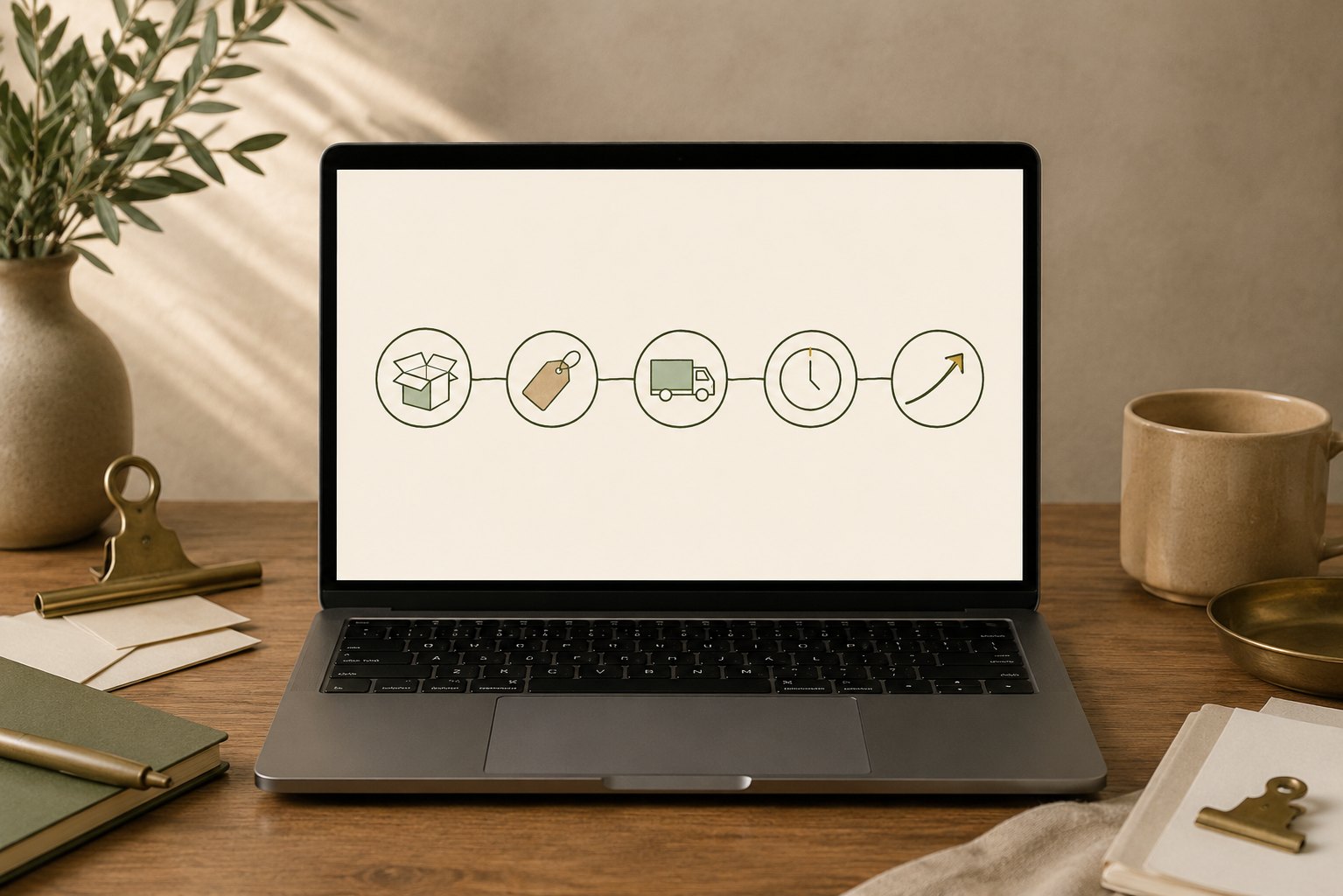
Almost every catering company begins its online-ordering journey with the same question: “What platform should we use?” It feels like the practical place to start. It isn't. It's the question that leads to expensive software nobody uses, online menus that don't convert, and a launch that quietly stalls after the first slow month.
Successful catering e-commerce doesn't start with a platform. It starts with a business problem worth solving, then works backward to the offer, the customer, the operation, and only at the very end, the catering technology. After building and running online ordering for a catering company, we boiled that path down into something repeatable: the Click to Table Framework. Five steps, in order, each answering a question you have to get right before the next one matters.
“The platform question feels like the start of the project. It's actually the fourth or fifth decision you should make, not the first.”
Step 1 — Find the opportunity
Before you evaluate a single piece of software, answer a harder question: what business problem is online ordering going to solve? “We should probably sell online” is not a strategy. A specific, revenue-shaped opportunity is.
The strongest opportunities usually fall into a few recognizable shapes. There's the seasonal revenue gap, the slow stretch between your busy seasons where a boxed-lunch or drop-off program could fill kitchen capacity you're already paying for. There's recurring revenue, the corporate client who orders lunch every Tuesday and would happily reorder in two clicks instead of a phone call. And there's the underserved customer, the small orders your sales team can't profitably chase by hand, but that a self-serve online channel could capture at scale.
Notice that none of those are about technology. They're about money, capacity, and customers. When you lead with the opportunity, every later decision has a job to do, and you can tell whether the online program is working, because you defined what “working” means before you built it.
Step 2 — Build the offer
Once you know the opportunity, resist the instinct that follows almost every caterer to the keyboard: putting the entire catering menu online. Your full menu is a strength in a consultative sale and a liability on a product page. Endless choice creates hesitation, and hesitation closes tabs.
A great online offer is curated, not comprehensive. Choose a small set of launch products that map directly to the opportunity from Step 1, the boxed lunches for the corporate gap, the drop-off packages for the recurring client, the holiday trays for the seasonal spike. Build those few things to be genuinely excellent: clear photos, honest serving counts, sensible price points, minimal decisions.
Keeping the first launch intentionally small isn't playing it safe, it's how you launch at all. A tight offer is faster to photograph, easier to price, simpler to produce consistently, and dramatically less work to get live. You can always add more once the first thing is selling. Almost nobody regrets launching too focused; plenty of caterers stall out trying to launch everything at once.
Step 3 — Design the buying experience
Here's the insight that separates catering e-commerce that works from catering e-commerce that limps along: different customers deserve different buying experiences. A single generic “order online” flow tries to serve everyone and delights no one.
Think about how differently your customers actually buy. A wedding is a high-consideration, emotional, once-in-a-lifetime purchase that wants reassurance, personalization, and a human somewhere in the loop. A corporate lunch is a fast, repeat, low-drama transaction that wants speed, saved details, and reliability. A school or institution buys on schedule, on budget, and often on approval. A parent ordering for a birthday wants it easy, friendly, and forgiving.
Those aren't small differences in copy, they're different journeys. And that's the whole point: the customer journey should determine your technology decisions, not the other way around. When you start from “what does this buyer need to feel confident?” the platform requirements fall out naturally, scheduling here, quick reorder there, a request-a-quote path for the complex jobs. When you start from the platform, you jam every customer into whatever flow the software shipped with.
“Let the buyer's journey choose the technology. When you reverse that order, you end up serving the software instead of the customer.”
Step 4 — Build the operational engine
This is the step caterers underestimate most, and the one that quietly sinks online programs. Every online order is not just a sale; it's a work order. The website is the easy part. Fulfilling what it sells, on time, correctly, at margin, is the business.
Before you scale a single channel, make sure the operational engine behind it can carry the load. That means honest answers on a handful of fronts:
Production
Can your kitchen make the online items alongside your event work without chaos? The best online menus overlap with your existing production line rather than adding a separate one.
Packaging and labeling
Every online order needs to be packed, labeled, and made travel-ready. Standardized packaging SKUs and clear labels, contents, allergens, delivery info, turn a potential bottleneck into a repeatable step.
Delivery
Getting food to the customer on time is its own operation, with real tradeoffs between in-house drivers, third-party delivery, and a hybrid model. Decide deliberately for your volume and geography, not by default.
Automation
Automate the repetitive, error-prone handoffs, order confirmations, production tickets, delivery routes, so a growing volume of orders doesn't mean a proportional growth in manual re-entry. Every rule you automate is a mistake you don't make and a task your team gets back.
Step 5 — Scale what works
Only now, with a real opportunity, a tight offer, a fitting buying experience, and an operation that can deliver, do you scale. And the discipline here is to expand from proof, not from hope.
The rhythm is simple: validate, measure, improve, expand. Validate that your first program actually solves the problem you named in Step 1. Measure the numbers that matter, orders, average value, repeat rate, fulfillment cost, not just traffic. Improve the offer and the flow based on what real customers do. Then, and only then, expand, more products, another customer segment, a new season, or a second channel.
The temptation is always to expand early, to add a second program before the first one is proven. Don't. A single online program you've made genuinely successful teaches you exactly how to build the next one. Three half-built programs teach you nothing except that you're spread too thin. Prove one thing, then reuse what you learned.
The point of the framework
Technology does not create successful catering e-commerce. Strategy does. The most capable ordering platform in the world can't rescue a program built on a fuzzy opportunity, an overwhelming menu, a one-size-fits-all buying experience, or an operation that can't fulfill what it sells.
The Click to Table Framework is simply a way to make those decisions in the right order, to think the program through as a business before you invest in software. Work the five steps and the technology question that felt so urgent at the start answers itself, because by then you'll know exactly what the tool has to do.
“Software is the last decision in a good e-commerce launch, not the first. Get the strategy right and the platform choice becomes obvious.”
Want to apply the framework to your own catering business? The free E-Commerce Strategy Assessment walks you through all five steps in fifteen guided questions, then sends a Personalized Launch Roadmap with recommendations tailored to your operation.
Complete the E-Commerce Strategy Assessment →Try this next
Ready to apply the framework to your business?
The free E-Commerce Strategy Assessment walks you through all five steps in fifteen guided questions, then sends a Personalized Launch Roadmap tailored to your catering business.
Keep going, related on Click to Table