Curate: One of the Most Forward-Thinking Catering Platforms Available Today
A closer look at Curate's all-in-one catering software, from proposals and recipe costing to payments and integrated online ordering, and why native e-commerce is reshaping catering technology.
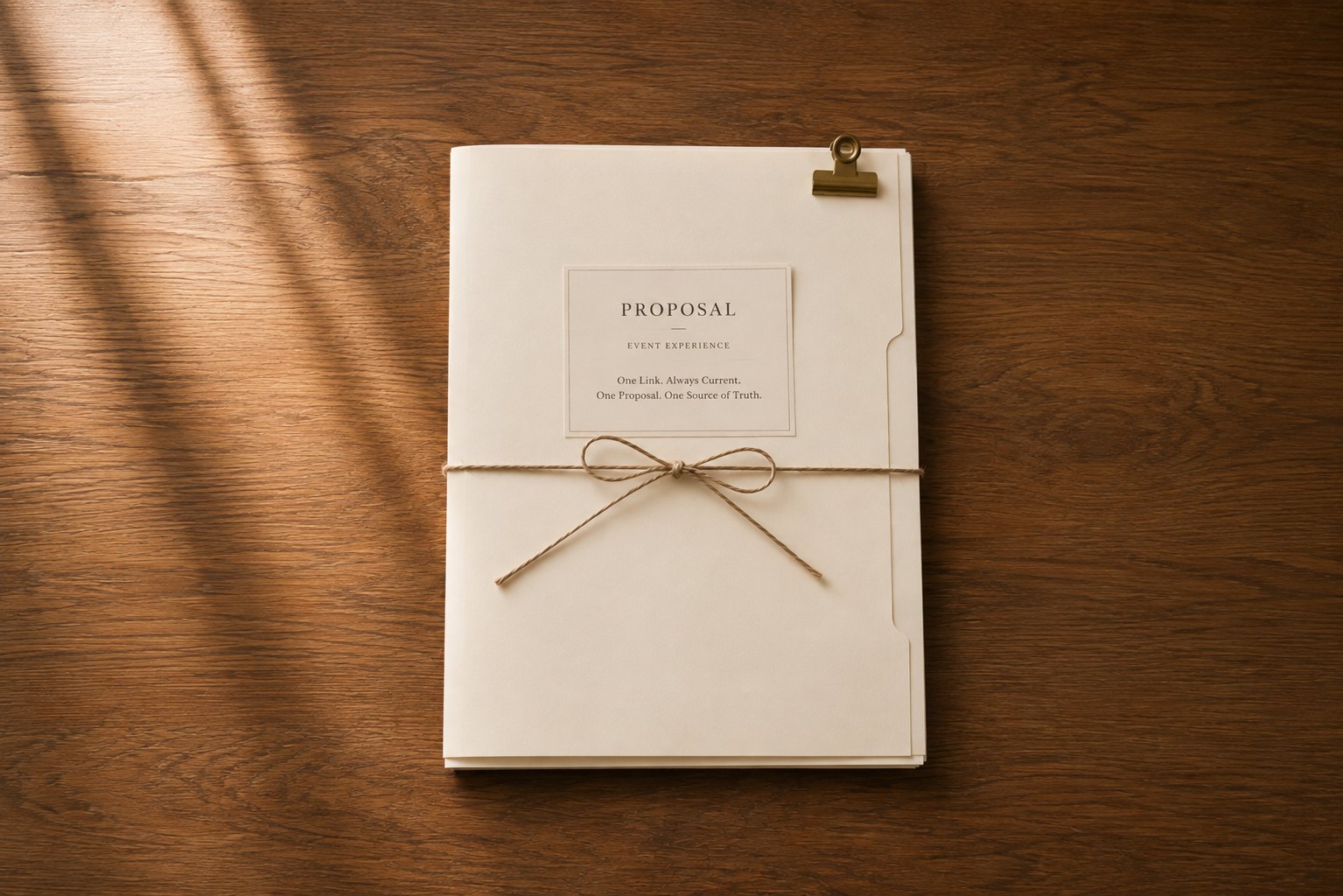
For most of catering history, the software problem was simple: there wasn't any. Proposals lived in one program, recipes in a binder, costing in a spreadsheet, the calendar on a wall, and payments wherever the check happened to land. Every one of those systems worked in isolation, and every handoff between them was a chance to lose time, money, or a detail that mattered.
That's the problem a new generation of catering platforms is built to solve, and Curate is one of the most forward-thinking of the group. Rather than bolt features together, it treats the whole event lifecycle, from the first inquiry to the final invoice, as one connected workflow. For a caterer, that shift from a pile of disconnected tools to a single operational spine is a big deal.
This isn't a sales pitch. The goal here is to explain what Curate actually does, who it's built for, where it fits into a real catering operation, and why its integrated commerce features point toward where catering technology is actually heading. If you want to see it firsthand, you can explore it through our referral link at the end.
What Curate is
Curate is an all-in-one catering and event-management platform. It brings the parts of the business that usually live in separate apps, proposals, contracts, payments, recipes, food costing, production, and back-of-house prints, into a single system where information flows from one stage to the next instead of you re-entering it by hand.
The company reports that customers save meaningful time across the board: less time building proposals, fewer cumulative hours on the sales process, and dramatically less time assembling recipes and shopping lists. Whether or not your numbers match theirs, the underlying idea is what matters, when the proposal, the recipe, and the production sheet all draw from the same data, you stop paying the tax of manual re-entry.
Who the platform serves
Curate is designed for event-based catering and hospitality businesses, the operators juggling multiple catered events a month with real complexity in proposals, production, and fulfillment. It fits full-service caterers, off-premise operators, and event-forward businesses that need a consultative sales process rather than a high-volume, one-click ordering model. It grew out of the event world (with deep roots in event florals) and has expanded into a serious catering toolset, so it's built for the choreography of real events, not just transactions.
Proposals: from inquiry to signed contract
Proposals are Curate's front door, and they're where the platform is strongest. Online inquiry forms capture leads so nothing slips through, and the CRM turns those leads into tailored proposals using reusable templates. You can build visually rich proposals, menus, images, event specifics, with or without pricing, and present them in a polished, professional format.
The operationally important part is the delivery: proposals, online contracts, and integrated payments all travel to the client through a single link, and any change syncs in real time so the client is always looking at the current version. That one detail, one link, always current, quietly eliminates a whole category of back-and-forth email and version confusion.
“The proposal isn't just a sales document. In an integrated platform, it's the seed the entire event grows from.”
Recipe management and food costing
Curate includes recipe and menu management, and it connects your menu items to costing so you can see the money, not just the food. For deeper, ingredient-level costing, Curate integrates with Galley, which brings real-time ingredient costs, automatic scaling by guest count, shopping lists, and profit-margin tracking. Operationally, this is what lets you price a menu with confidence instead of guessing, and know your margin before you send the proposal, not after the event.
Production planning and purchasing
Once an event is booked, the work moves to the back of house, and Curate carries the same data forward into production. It generates back-of-house prints and helps coordinate the kitchen, and through the Galley integration it extends into production planning and purchasing. Because the production sheet and the shopping list are built from the same recipes and guest counts as the proposal, the kitchen isn't re-keying anything, it's executing the plan that was already priced and approved.
Contracts, e-signatures, and payments
Contracts and e-signatures live inside the same client link as the proposal, so approvals happen in context. Payments run through a Stripe integration built directly into the proposal, supporting single or multiple (deposit-and-balance) payments. For the client it feels like one smooth experience; for the operator it means the deposit, the signature, and the approved scope are all captured in one place, and you can see payment status without chasing it down.
Reporting and real-time insight
Because everything shares one system, Curate can report on the whole operation with real-time data, bookings, sales, and event details in one place, plus a QuickBooks integration to keep invoices and payments in sync with your accounting. The value here is decision-making: when your numbers are current and connected, you can spot trends and make calls based on what's actually happening rather than last month's spreadsheet.
AI-powered features
Curate has been layering AI and automation across the event lifecycle, from the early inquiry stage through fulfillment and follow-up. The practical promise of AI in a platform like this isn't novelty; it's removing repetitive work, drafting and organizing faster, flagging what to do next, so your team spends more time on hospitality and less on administrative busywork. As with any AI feature, the right approach is to let it accelerate the work while a human still owns the judgment.
The big shift: integrated online ordering
If there's one area worth slowing down on, it's commerce. Native, integrated online ordering is one of the most significant shifts happening in catering software right now, and it's where a platform like Curate gets genuinely forward-thinking.
The old model treated online orders as a separate island: a storefront over here, operations over there, and a person in the middle copying orders from one into the other. Curate's approach lets customers browse menus, customize orders, choose delivery or pickup, and pay, and then routes those orders directly into the same system that handles proposals, production, and fulfillment. It also connects to Shopify, so orders placed through a Shopify store can flow into Curate as events. Either way, the order isn't a dead end, it's the start of an operational workflow.
Why that matters, in plain operational terms:
- Online orders flow straight into operations, no re-entering an order that a customer already typed in for you.
- Manual data entry drops, which means fewer transcription errors on dates, counts, and menus.
- One centralized product catalog powers both your sales team and your online store, so pricing and menus stay consistent everywhere.
- The customer experience improves, browsing, customizing, and paying online is what modern clients expect.
- Order management gets easier, everything lands in one queue instead of scattered inboxes and voicemails.
- Everything runs tighter, because the same order drives the proposal, the kitchen print, and the invoice.
- The business scales, because volume no longer means proportionally more manual order entry.
“The future of catering commerce isn't a storefront bolted onto operations. It's a storefront that is operations.”
Why integrated commerce matters operationally
It's easy to think of online ordering as a marketing feature, another way to take money. But its real value is operational. Every order that enters your system already structured, correct date, correct count, correct menu, tied to the right catalog item, is an order your team doesn't have to interpret, re-key, or double-check. Multiply that across a busy season and integrated commerce stops being a convenience and becomes a capacity multiplier: the same team can handle more events without more chaos.
Which businesses benefit most
Curate is at its best for caterers running multiple events a month who want professional proposals, real recipe costing, organized production, and increasingly, integrated online ordering, all on one connected platform instead of a patchwork of disconnected systems. If you're a very small operation doing a handful of events a year, or a pure high-volume, drop-off-only shop, the fit may be different. But for the growing, event-driven caterer feeling the pain of manual handoffs, the case for a unified platform is strong.
Where Click to Table fits alongside a platform like Curate
This is worth being clear about: Click to Table and Curate solve different parts of the catering workflow, and they complement each other. Click to Table focuses on the planning and operational math, the quick, practical calculations you run while shaping an event. Platforms like Curate manage the day-to-day business operations that turn a booked event into a fulfilled one.
Click to Table helps you plan:
- Staffing levels by role and service style
- Beverage and bar quantities
- Ice requirements
- Rental quantities
- Buffet flow and throughput
- The event calculations you need before you commit numbers to a proposal
A platform like Curate helps you execute:
- Client proposals and contracts
- Production documents and back-of-house prints
- Recipe management and food costing
- Purchasing
- Payments
- Online ordering and event fulfillment
“Different tools solving different parts of the catering workflow.”
In practice, the planning tools help you get the numbers right; the operational platform helps you deliver on them. Use Click to Table's free calculators to size the event, then let a system like Curate carry that event through proposal, production, and payment.
Start with the planning side, free. Size your staffing, beverages, ice, and buffet flow before the numbers ever reach a proposal.
Explore Click to Table's free tools →Curate is a great fit if you…
- ✔ Manage multiple catered events every month
- ✔ Want professional, visually polished proposals
- ✔ Are ready to bring recipe and food costing into your pricing
- ✔ Need production and back-of-house organization
- ✔ Are looking for integrated online ordering
- ✔ Would rather have one connected operational platform than several disconnected systems
The bottom line
Curate is a strong example of where catering technology is going: away from disconnected tools and toward a single platform where sales, production, payments, and, increasingly, commerce all share the same data. Its integrated online ordering in particular is worth paying attention to, because it turns a customer's order into the first step of an operational workflow rather than one more thing to re-type. It won't be the right fit for every operation, but for the growing, event-driven caterer, it's one of the most forward-thinking options available today.
If a single connected platform sounds like your next step, you can explore Curate and book a demo through Click to Table's referral link.
Explore Curate →Affiliate link. See disclosure.
Continue building your catering tech stack
This is just the beginning of Catering Tech Stack. Over time, the series will grow into a trusted library for caterers making technology decisions. Reviews and guides on the way include: a Caterease review, a Tripleseat review, Google Workspace for caterers, Canva for catering sales teams, AI tools every caterer should know, the best online ordering platforms for caterers, and a guide to choosing catering software, and knowing when it's finally time.
Some links in this article are affiliate or referral links. If you sign up or start a trial through them, Click to Table may earn a commission or referral credit at no additional cost to you. It never changes our recommendations.
Finish the job
Staffing Calculator
Right-size every role for the service style and the venue.
Keep going, related on Click to Table