How Much Ice Does Your Event Really Need?
Ice isn't one number, it's three. Here's how caterers plan beverage, cooling, and backup ice so nothing melts down mid-event.
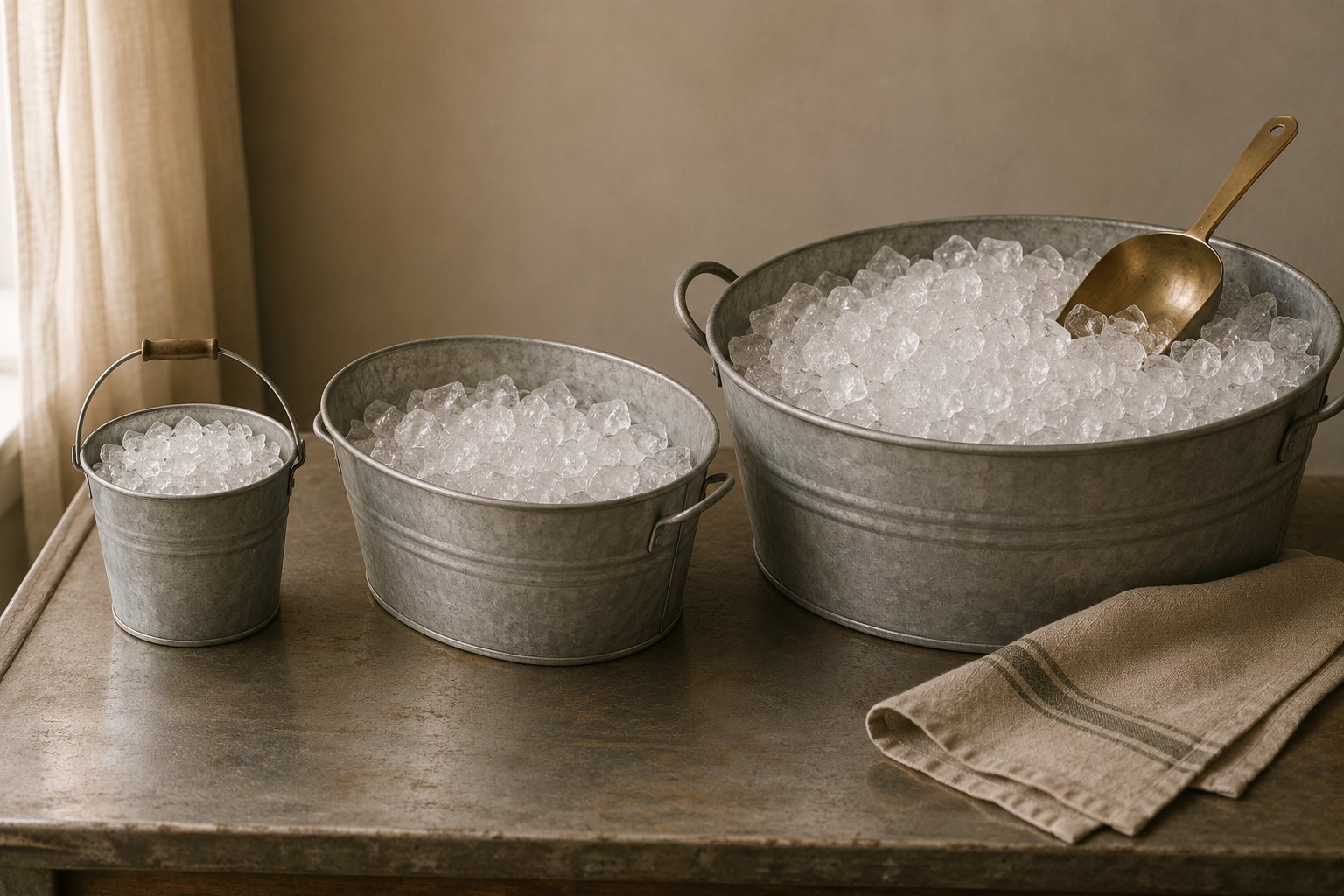
The fastest way to under-order ice is to treat it as a single pounds-per-guest figure. In real catering operations, ice does three separate jobs: chilling drinks, cooling displays, and covering the unexpected. Each responds to different conditions. Plan them separately and you will never watch a raw bar go warm or a bar run dry at hour four.
The three kinds of ice
- Beverage ice: goes into glasses, shakers, and drink tubs. Driven by your bar program and how drinks are served.
- Cooling ice: chills bottles, cans, and food displays. Driven by what you're keeping cold and for how long.
- Backup ice: the contingency you don't open unless you need it. Driven by event complexity, heat, and exposure.
Beverage ice: the bar program decides
A full cocktail bar can use three times the beverage ice of a beer-and-wine setup, because every cocktail needs ice in the glass and often more in the shaker. Beer, wine, and a signature cocktail land in between. Non-alcoholic service is lighter still, mostly water and soda over ice. Then adjust for service style: self-service stations always burn more ice than a bartender who scoops with intent, and longer events simply pour more drinks.
Cooling ice: count your cold surfaces
Cooling ice is easy to underestimate, because it is invisible until the seafood warms up. Every cold surface has an appetite: a raw bar or seafood display needs a deep, constantly-topped ice bed; bottled beer and canned soda need tubs; salad and dessert displays need shallow beds. Long, hot, outdoor events multiply all of it, because displays melt faster and need replenishing through service.
Backup ice: cheap insurance
Backup ice is the difference between a professional and a scramble. Plan 10% for a simple indoor event and up toward 20% for a long, hot, outdoor affair with a full bar and chilled displays. Keep it unopened, in insulated coolers, in the shade. And schedule a portion to arrive late, when melt peaks and the first order is running thin.
“Nobody remembers the caterer who had enough ice. Everybody remembers the one who ran out.”
Let the tool do the math
Once you understand the three jobs, you don't need to do the math by hand for every event. The Ice Calculator applies this framework to your guest count, duration, season, weather, exposure, bar program, service style, and displays. It hands you beverage, cooling, and backup totals, a purchasing plan in 10, 16, and 20 lb bags, and a plain-language note on why the number moved.
Finish the job
Ice Calculator
Estimate beverage, cooling, and backup ice for any event.
Frequently asked questions
How much ice per person for an event?
How many bags of ice for 100 guests?
How much ice for 200 guests?
What is the difference between beverage, cooling, and backup ice?
Keep going, related on Click to Table