Complete Guide to Place Settings for Caterers and Event Planners
Where every plate, fork, glass, and napkin belongs, and why. A practical, operations-first guide to setting a table correctly for any event, from casual buffets to formal dinners.
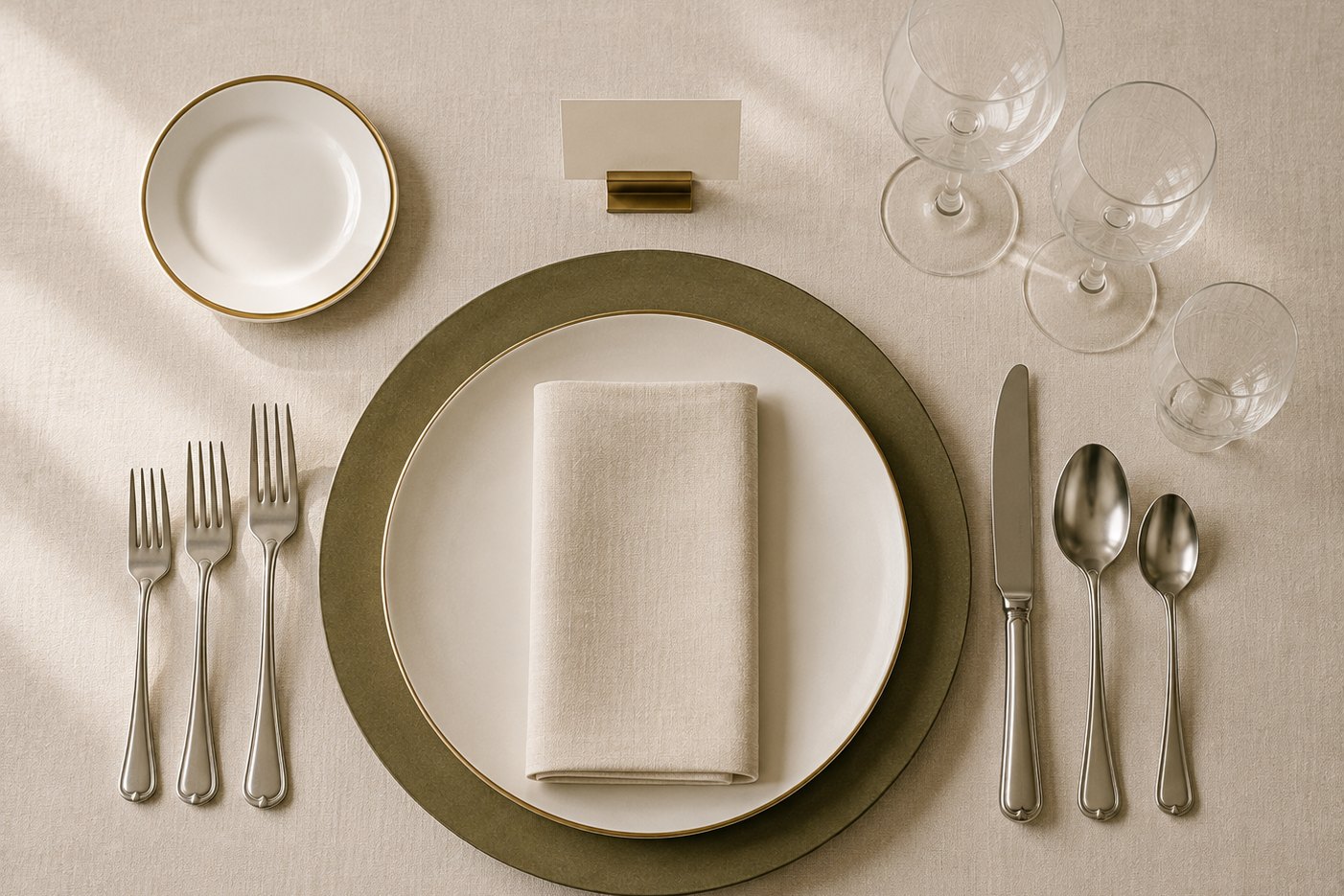
A correctly set table does quiet work. Before a single word is spoken, it tells the guest what kind of event they've walked into, and it tells the service team how the meal will flow. For caterers and banquet crews, place settings aren't etiquette trivia; they're an operational language. Get the layout right and service runs smoothly. Get it wrong and you're reaching across guests, hunting for the right fork, and undermining an otherwise beautiful room.
This is the reference we'd hand a new banquet captain: what a place setting is, why it matters, and exactly where everything goes for the events you actually work, buffets, plated dinners, weddings, and corporate functions. If you'd rather build one visually, our free Place Setting Builder draws a printable, top-down diagram for any combination of these choices.
What is a place setting?
A place setting (sometimes called a 'cover') is the arrangement of dishes, flatware, glassware, and linen at a single guest's seat. Every item has a home, determined by the order it's used and which hand reaches for it. The guiding logic is simple: forks on the left, knives and spoons on the right, glasses above the knife, and utensils arranged so guests work from the outside in as courses arrive.
Why proper place settings matter
Beyond looking polished, a correct setting solves real service problems:
- It signals the event's formality and sets guest expectations before the first course.
- It makes service efficient, staff clear and place items in a predictable pattern across every seat.
- It reduces mistakes, when every cover matches, missing or extra items are obvious at a glance.
- It protects the guest experience, no one should have to ask which glass is theirs or reach for a fork that isn't there.
The basic place setting
Start here, because every fancier setting is just this with more added. The dinner plate is centered on the cover, about an inch from the table edge. The dinner fork sits to the left of the plate. The dinner knife goes to the right, blade facing in toward the plate. If soup or dessert calls for it, a spoon sits to the right of the knife. The water glass sits just above the knife. The napkin folds onto the plate or rests to the left of the forks. That's a complete, correct setting for a huge share of everyday events.
Buffet place settings
Buffets are the exception that trips people up. Because guests serve themselves and often carry their plate from the line, buffet covers are usually pared down: a napkin, flatware (often rolled or set simply), and a water glass, with plates staged at the buffet rather than at the seat. A full formal cover at a buffet seat is not only unnecessary, it gets in the way. Match the setting to how the food actually travels.
Formal dinner place settings
Formal, multi-course service is where the cover expands, and where the outside-in rule earns its keep. Under the dinner plate you may place a charger, a decorative base plate that stays through the opening courses. To the left, forks line up in order of use, salad fork outermost when a salad precedes the entrée, dinner fork closest to the plate. To the right, the dinner knife sits blade-in, with a soup spoon outside it when soup is served. Dessert utensils usually sit horizontally above the plate. Only set the pieces for courses you'll actually serve, extra silver isn't elegant, it's clutter.
Wedding reception place settings
Weddings run the full range, from relaxed family-style to black-tie plated dinners, so let the menu and the couple's vision set the formality. A plated wedding dinner typically warrants a fuller cover (often with a charger and a napkin treatment that carries the design), while a station or buffet reception leans simpler. The constant is consistency: every cover in the room should be identical, because at a wedding, the whole table is part of the photograph.
Corporate event place settings
Corporate functions reward clean, efficient covers. Business breakfasts and lunches usually call for a standard setting, plate, fork, knife, water, and often a coffee cup, kept tidy and fast to clear so the program stays on schedule. Galas and awards dinners move toward the formal end. The priority is a setting that looks professional, sets quickly across many seats, and doesn't slow service during a timed agenda.
Bread plate placement
The bread plate belongs above the forks, to the upper left of the cover, with the butter knife resting across it, blade facing in. A helpful memory trick for guests and new staff alike: 'BMW', Bread to the left, Meal in the middle, Water (and drinks) to the right. Your bread is always the plate on your left.
Glassware placement
Glasses sit above and slightly to the right of the dinner knife, and they're arranged in the order they'll be used. The water glass goes first, directly above the knife. Wine glasses follow to its right; if multiple wines are served, they line up in service order. A champagne flute, when used for a toast, sits to the right of the wine. Keep the cluster tight and consistent so the table reads cleanly from across the room.
Utensil order explained
The single rule that makes formal service intuitive: guests work from the outside in. Each course's utensil is the next one toward the plate, so by placing silver in reverse course order, you let guests simply reach for the outermost piece every time. From the outside in, a typical progression looks like:
- Salad fork (far left) → dinner fork (nearest the plate on the left)
- Soup spoon (far right) → dinner knife (nearest the plate on the right, blade in)
- Dessert fork or spoon, set above the plate, used last
Set only what the menu requires, and the outside-in logic does the rest of the explaining for you.
Common mistakes banquet teams make
- Knife blades facing outward, they should always face the plate.
- Over-setting a buffet with a full formal cover the guest can't use.
- Inconsistent covers, one seat with a salad fork, the next without.
- Glasses placed in the wrong order, or spread too far from the knife.
- Bread plate on the right, or missing when bread is being served.
- Setting utensils for courses that aren't on the menu.
- Placing coffee cups at the initial set when coffee service comes later.
When to use chargers
A charger is a decorative base plate that frames the setting and adds a layer of polish. Use them for formal and upscale events where the table is meant to make a statement. In classic service, the charger stays through the opening courses and is cleared before the entrée plate is set down, never serve the main course directly on the charger. For casual events and buffets, chargers are usually skipped.
Coffee and dessert service
Timing is everything here. Coffee cups and saucers are typically not part of the initial set, they're brought out when coffee service begins, placed to the right of the cover. Dessert is handled one of two ways: when dessert is served with the meal, a dessert fork or spoon can be set above the plate from the start; when dessert is a separate, later course, the utensils (and often the coffee) arrive with it. Deciding this in advance keeps the table uncluttered and the service sequence clean.
Want a diagram you can actually print for setup? Choose your service style, formality, and beverages, and get a top-down place setting with a checklist.
Open the Place Setting Builder →A printable place setting checklist
For event day, nothing beats a printed reference the whole team can work from. The free Place Setting Builder generates a top-down diagram and a matching setup checklist from your selections, so a captain can print one page, hand it to the crew, and know every seat in the room will match. Build yours above, then print it before you set the first table.
Finish the job
Place Setting Builder
Build a correct place setting with an interactive, printable top-down diagram for any event.
Frequently asked questions
Where does the water glass go?
Which fork is used first?
Do buffet events need complete place settings?
Where does the bread plate belong?
Should coffee cups already be on the table?
What's the difference between casual and formal place settings?
Keep going, related on Click to Table