What To Do With Catering Leftovers: Donation, Composting & Smart Food Recovery
Nearly every caterer eventually faces the same question at the end of the night: what do we do with the food that's left? The answer is a plan you make before the event, not after.
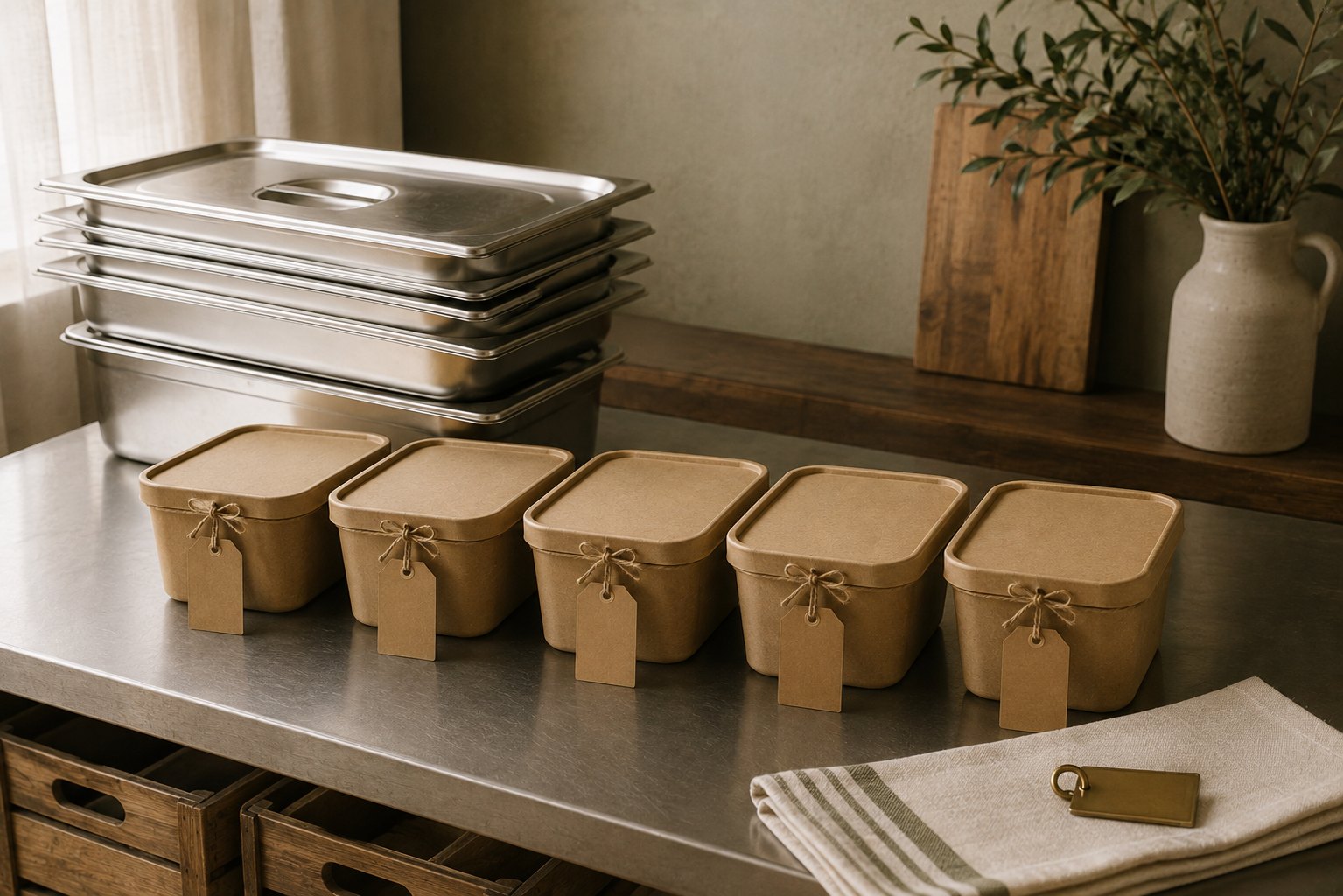
Every caterer runs into the same moment eventually. The last guest has left, the room is coming down, and there on the back table sit the pans nobody touched. Sometimes it's a couple of half hotel pans. Sometimes it's enough untouched meals to feed a few hundred people. Either way, someone has to decide what happens next, usually the most exhausted person in the building, at the worst possible time to be making decisions.
The caterers who handle leftovers well aren't the ones who never over-produce. They're the ones who decided what they'd do with the surplus before the event ever started. A donation contact saved in a phone. A few extra lids in the van. One person who knows it's their job. That's the whole difference between food that feeds someone and food that fills a dumpster.
This guide walks through the realistic options, sorting, donating, composting, and designing menus that leave less behind, without the guilt trip. And it starts with knowing your own numbers. Running the Leftover Analyzer after each event turns a season of gut feelings into a record of what you actually over-produced, so you can order tighter next time without shortchanging the guest experience.
Log what came back after your event and get a read on where to trim, the first step toward wasting less before donation or compost ever enters the picture.
Open the Leftover AnalyzerFirst: separate safe food from waste
The single most useful thing you can do happens in the first ten minutes of breakdown: sort. Not everything left on site is the same, and treating it that way is how good food gets thrown out and questionable food gets donated. Pull your leftovers into clear buckets as you clear:
- Unserved, packaged items: sealed drinks, individually wrapped goods, unopened product. The easiest to donate.
- Untouched buffet backup: the pans staged in the back that never went on the line.
- Food that stayed under temperature control: held hot above 135°F or cold below 41°F the entire time, with a log to show it.
- Guest-facing buffet food: anything that sat on the line, exposed to the room and to guests.
- Plate waste and scraps: what came back on plates and trays.
The first three groups are your donation candidates. The last two are not. Plate waste and food that was on the open buffet have left your control, and no reputable food-rescue partner will accept them. Sorting as you go, rather than piling everything together and picking through it later, is what keeps the good food usable.
The food recovery order of operations
There's a simple hierarchy for what to do with surplus food, and it's worth keeping in your head as a default order of operations. The EPA long published it as the "Food Recovery Hierarchy," and in 2023 updated and expanded it into the Wasted Food Scale. The details got more precise, but the priority order caterers care about didn't change:
- Prevent it: the best surplus is the surplus you never produced. This is where tracking your leftovers pays off.
- Donate safe food: feed people first, whenever the food qualifies.
- Feed animals: some farms and sanctuaries accept certain food scraps; check what's permitted locally.
- Industrial uses: rendering, fats and oils recovery, anaerobic digestion for energy.
- Compost: return nutrients to the soil instead of the landfill.
- Landfill (and down-the-drain) last: the option of last resort, not a default.
You don't need to memorize eleven pathways. Just remember the shape of it: prevent, then feed people, then feed the soil, and let the dumpster be the thing you actively avoid rather than the thing you reach for first.
Organizations that help recover event food
You don't have to build a donation program from scratch. A handful of national organizations exist specifically to connect surplus food with the people who need it, and most operate through local partners. The move is to establish a relationship before you need one. Event night is not the time to be cold-calling a food bank.
Copia
A technology platform that matches businesses with nearby nonprofits, handles the logistics of pickup, and generates tax and impact reporting. Popular with hospitality and corporate food operations, and built to help with compliance in places (like California) that now mandate food donation.
Replate
A nonprofit that lets you schedule a surplus-food pickup in a few clicks and matches it to a nearby organization, with food-safety-trained rescuers handling delivery. Works well for caterers and foodservice, and its dashboards track the social and environmental impact of what you donate.
Food Rescue US
A volunteer-powered network that moves surplus food from businesses to social-service agencies, coordinated through a mobile app. Strong in local markets across the country, often the fastest way to get a same-day pickup.
Food Donation Connection
Specializes in connecting restaurants and foodservice operations, caterers very much included, with local hunger-relief agencies, and manages the donation and documentation process. A natural fit if you want a foodservice-oriented partner.
MEANS Database
A nonprofit online platform, Matching Excess And Needs for Stability, that posts your available surplus to nearby food providers who can claim and collect it. Useful when you have irregular, event-driven surplus rather than a daily stream.
Food Recovery Network
A student-led network recovering surplus from college and university campuses and events. If you cater on or near a campus, there may already be a chapter equipped to take what's left.
Best practices for event donation
Donation succeeds or fails on preparation, not goodwill. Every caterer who donates reliably runs some version of this checklist:
- Assign one person ownership: donation is someone's actual job for the night, not everyone's vague responsibility.
- Label pans with contents and the time they came off temperature control.
- Record production and hold times so you can prove the food stayed safe.
- Maintain safe temperatures right up to handoff: hot food hot, cold food cold.
- Pack extra hotel pans and lids so you're never transferring donations into whatever's lying around.
- Have transport containers staged and ready before service ends.
- Know who to call: the partner and pickup window confirmed before the event.
- Take photos if your partner or jurisdiction requires documentation.
Composting isn't failure
Some food can't be donated, and that's not a moral failing. It's reality. Plate scrapings, spoiled product, and prep trim were never going to feed anyone. Composting keeps them out of the landfill and turns them back into soil, which is a genuinely good outcome. Things that belong in the compost stream include:
- Spoiled or expired food
- Plate waste and buffet-line food that can't be donated
- Produce trim, peels, and cores from prep
- Coffee grounds and filters
- Eggshells
It helps to know the difference between backyard and commercial composting. A backyard pile handles fruit and vegetable scraps but generally can't take meat, dairy, oils, or compostable serviceware. Commercial composting facilities run hotter and can process far more, often including cooked food, bones, and certified-compostable containers. For catering volumes, a commercial hauler or drop-off facility is almost always the realistic path. Research the facilities near you before the season starts, and confirm exactly what they accept.
Design menus that naturally reduce waste
The most sustainable leftover is the one you never cooked. A lot of surplus is designed in at the menu and production stage, which means it can be designed out. Some of the levers experienced kitchens pull:
- Replenish buffets in smaller waves instead of loading the line all at once.
- Batch cook and hold reserves, finishing later batches only if the count warrants it.
- Chase accurate RSVPs and final counts: most over-production traces back to a soft number.
- Track historical production so you're forecasting from data, not from the last panic.
- Build in flexible side dishes that stretch or hold better than proteins.
- Make late production decisions where the kitchen allows: cook to the room you actually have.
- Plan staff family meal intentionally as a home for a portion of the surplus.
- Cross-utilize ingredients across the menu so extras have a second use.
This is exactly where the Leftover Analyzer earns its place. Log what came back after each event, which dishes, roughly how much, and over a season you build the one thing most operations lack: real historical production data. That record is what lets you order tighter with confidence instead of padding every count "just in case."
Protecting your business
Caterers worry about the liability of donating, and it's a fair question. The practical answer is that donation, done responsibly, is well-supported, but it rests on the same food-safety discipline you already practice. Keep your house in order:
- Follow your health department's guidance on what may be donated and how.
- Use proper cooling procedures and never let food linger in the danger zone.
- Keep temperature logs: they're your documentation that food was safe at handoff.
- Document what you donated, to whom, and when.
On the legal side, food donated in good faith is broadly protected under the federal Bill Emerson Good Samaritan Food Donation Act, which shields donors from civil and criminal liability when safe food is given to nonprofits. The Food Donation Improvement Act, signed in early 2023, strengthened those protections and extended them to qualified direct donors, caterers among them, who donate directly to people in need. None of this is legal advice, and protections depend on following the rules: donate food that was safe at the time of donation, in good faith, and always follow your local regulations and your partner's policies.
The goal was never zero leftovers
Aiming for zero surplus is a good way to run out of food in front of a client, and abundance is part of what people are paying for. The goal isn't zero. The goal is intentional. Every tray that feeds someone instead of a dumpster, every compost bin filled instead of a trash bag, every event you actually look back on and learn from, that's the work. It reduces waste, serves more people, and protects your margins all at once, and none of it requires you to compromise the guest experience.
Start with the numbers. Run the Leftover Analyzer after your next event, and the one after that, and let the pattern show you where to tighten. Smarter production forecasts are how good food stops becoming waste in the first place.
Try this next
Turn every event into better forecasting
Log your leftovers after each event and build the historical production data that lets you order tighter without shortchanging the guest experience.
Frequently asked questions
Can I donate leftover food from the buffet?
Isn't donating food a liability risk?
How do I start donating catering leftovers?
What's the difference between backyard and commercial composting?
How can I reduce leftovers in the first place?
Keep going, related on Click to Table