How to Plan a Grazing Table: Quantities, Variety & Seasonal Ideas
How caterers plan a grazing table that balances quantity, variety, display space, and replenishment, without overproducing.
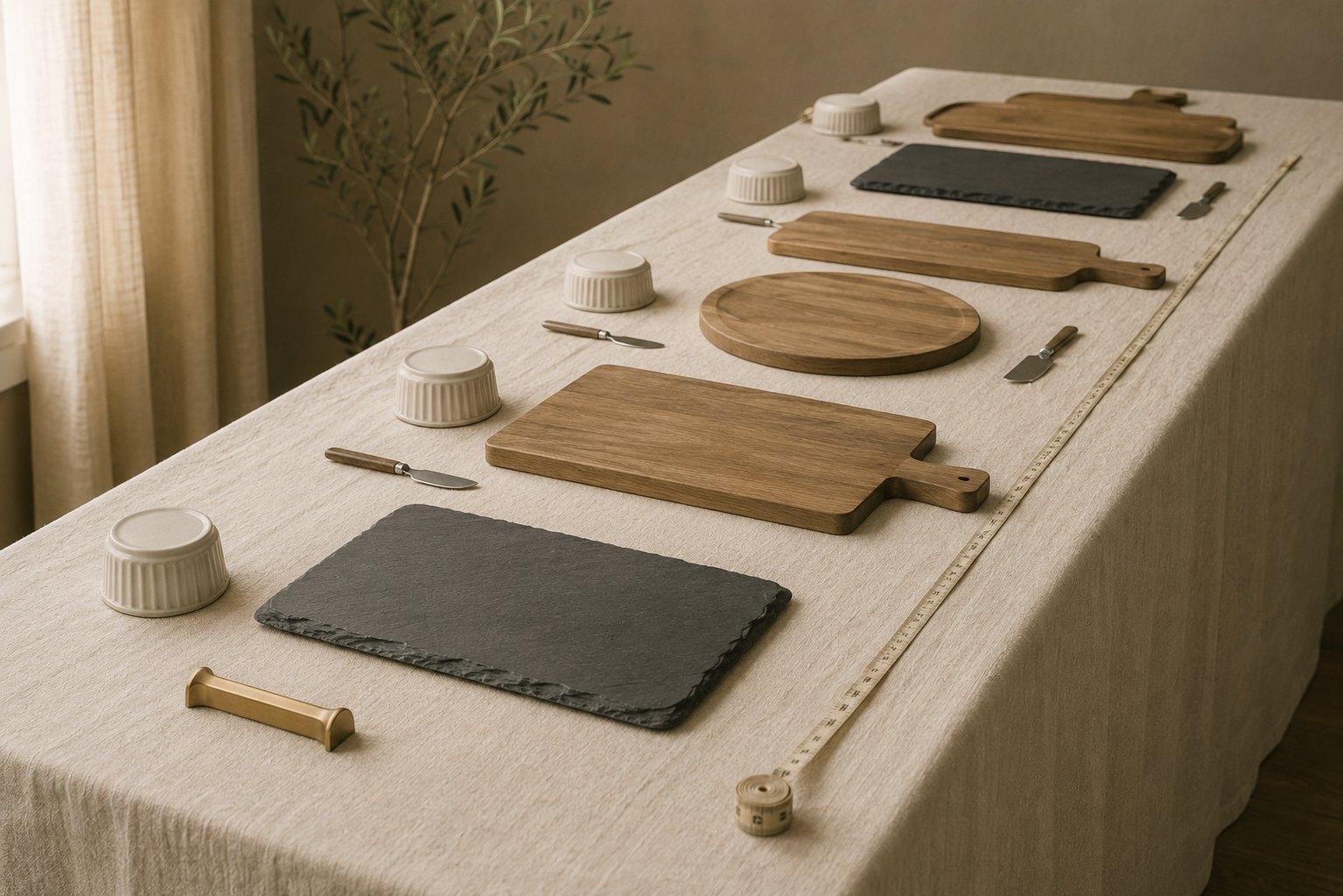
A grazing table earns its reputation on sight, but a successful one is not simply a large pile of cheese and charcuterie. The work is in the balance: quantity against food cost, variety against coherence, and visual abundance against a footprint your team can actually replenish through a full service window.
Whether you're building a cocktail-hour spread for 40 or a meal-replacement display for 250, the same planning questions apply: how much food, what to include, how much table you need, and how you'll keep it looking full from the first guest to the last. Work through the ranges by hand, or let the grazing table calculator do the math.
Planning a grazing table? Use the Grazing Table Planner to estimate quantities and build an assortment based on your guest count, season, event style, and setting.
Plan Your Grazing Table →How much food do you need?
Quantities move with the table's role in the meal. A display meant to tide guests over before a seated dinner is a different order sheet than one meant to be the meal. As a per-guest starting point:
- Cheese: about 1.5–2 oz for a light appetizer, up to 3–4 oz when the table replaces a meal
- Charcuterie: about 1–1.5 oz light, up to 2.5–3 oz for heavy grazing or a meal
- Fresh fruit: roughly 2–4 oz depending on role and overall composition
- Crackers and bread: 4–6 pieces light, up to 10–12+ for a meal replacement
- Accompaniments (dried fruit, pickles, nuts, spreads): roughly 2–4 oz combined
Treat those as starting ranges, not a formula where every category maxes out at once. A grazing table is one complete assortment; when several substantial foods share the surface, each carries a little less of the load. Large events also graze slightly less per head, so plan a little less per head as the guest count grows, rather than scaling every number in a straight line.
Want numbers for your specific event? The Grazing Table Planner adjusts these ranges for guest count, role, duration, season, and setting.
Open the Grazing Table Planner →How to choose cheese
The most common mistake is variety for its own sake. Five cheeses that all read as mild and semi-firm give guests less than three chosen for contrast. Build the selection around roles, not a number:
- One crowd-pleaser: cheddar, gouda, manchego, or havarti
- One soft or creamy cheese: brie, camembert, or chèvre
- One distinctive or gourmet cheese: blue, washed-rind, aged alpine, or a flavored chèvre
For larger tables, add contrast through milk type, texture, age, region, and flavor intensity rather than adding more wedges that fill the same role. A goat's-milk cheese beside a cow's-milk cheese, a young cheese beside an aged one, a mild beside a sharp: that is what makes an assortment feel considered.
How to choose charcuterie
Charcuterie follows the same logic as cheese: balance a familiar option with something delicate and something more distinctive:
- A familiar anchor: Genoa or Calabrese salami
- A delicate option: prosciutto, speck, or bresaola
- A distinctive selection: soppressata, coppa, finocchiona, or a smoked meat
How much you need depends on whether charcuterie is a supporting player or a headline. On a cheese-forward table it can sit at the low end of the range; on a heavier grazing or meal-replacement table it climbs. When a table is vegetarian, fill in with additional cheeses, marinated vegetables, spreads, legumes, fruit, and nuts rather than simply leaving a gap.
Don't forget the supporting cast
The cheese and charcuterie get the attention, but the supporting ingredients do the real work of making a table feel abundant, and they balance food cost. Plan for:
- Fresh and dried fruit for color, sweetness, and acidity
- Crackers and bread in at least two textures
- Jams and preserves, mustard, olives, cornichons, and pickled vegetables for contrast
- Honey or a honeycomb round, especially good over blue, brie, and aged cheeses
- Nuts for crunch, or seeds and crispy legumes when the table is nut-free
- Dips and spreads such as hummus, whipped feta, or tapenade
- Herbs and edible garnishes for visual rhythm
A strong table does not require dozens of different items. Strategic repetition, the same grapes, crackers, herbs, and nuts appearing across the display, makes a spread feel generous while keeping shopping and prep simple.
How much table space do you need?
Surface size isn't just about guest count. A table's footprint depends on how much food is on it, its role in the meal, the number of varieties, the density you want, guest access, how you will replenish, and how long service runs.
A visually abundant grazing table does not mean putting all of your inventory on the table at once. Treat the display as a working service station, not static décor: what's out is the opening scene, not the whole show.
- Plan roughly 24–30 inches of usable depth so guests can reach without leaning over food
- Past about 10–12 linear feet, split into multiple stations for flow, access, and freshness
- Don't stretch one absurdly long table just because the guest count is high
Not sure how much space your grazing table needs? The Grazing Table Planner recommends both food quantities and display size based on your event.
Calculate Your Grazing Table →Plan by season
Seasonality shapes both quality and cost. Treat these as inspiration, not rigid menus. Availability, geography, and supplier quality should drive the final call:
- Spring: berries, chèvre, herbs, citrus, and lighter preserves
- Summer: stone fruit, berries, melon, basil, peppers, and fresh cheeses where temperature control allows
- Fall: apples, pears, figs, aged cheeses, apple butter, nuts, and rosemary
- Winter: citrus, pomegranate, dried fruit, robust cheeses, cranberry preserves, and marmalade
Indoor vs. outdoor grazing tables
Indoors, climate control buys you flexibility: softer cheeses, more delicate fruit, taller and more layered displays, and a larger initial staging. Outdoors, the environment sets the rules.
- Favor firm and semi-firm cheeses, and limit how much soft cheese is out at once
- Replenish cheese, charcuterie, dips, and delicate fruit in small, frequent batches
- Plan for shade and avoid direct sun; account for heat, humidity, wind, and insects
- Protect crackers and bread from humidity, and secure lightweight labels, napkins, and décor
- Pre-slice some firm cheese so you can serve without displaying your whole inventory
Build for replenishment, not just the photo
The opening display is only the first version of the table. The difference between a good grazing table and a great one is what happens after the first rush, when the pretty photo is gone and there are still two hours of service left.
- Hold roughly 25–40% of total product in reserve when appropriate, weighted toward outdoor and temperature-sensitive items
- Keep backup cheese and charcuterie properly held and refresh in small batches
- Use smaller vessels for spreads, and refresh crackers and bread to protect texture
- Design replenishment zones your staff can refresh independently
- As service winds down, consolidate the display and tighten the footprint instead of leaving food scattered across a large surface
“A great grazing table should look intentional when the first guest arrives, halfway through cocktail hour, and when the last guest walks past it.”
Grazing table planning checklist
- Guest count and the table's role in the menu
- Event duration
- Cheese balance: crowd-pleaser, creamy, distinctive
- Charcuterie balance, or plant-based substitutes
- Fresh and dried fruit
- Crackers, bread, spreads, pickles, and nuts
- Dietary considerations and clear labeling
- Season and sourcing
- Indoor or outdoor setting
- Display surface and station count
- Holding and replenishment plan, with reserve product
- Serving utensils and food-safe signage
Finish the job
Grazing Table Planner
A grazing table calculator for quantities, assortment, display size, and replenishment.
Keep going, related on Click to Table